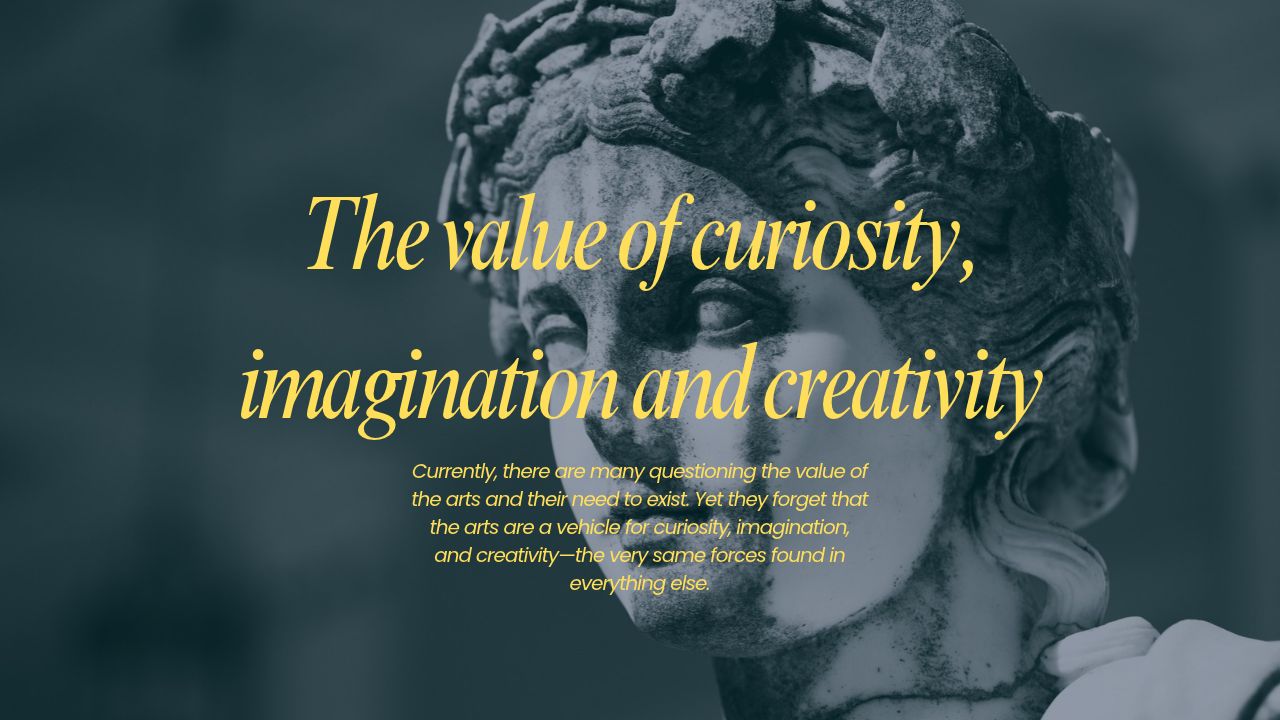
The value of curiosity, imagination and creativity
Currently, there are many questioning the value of the arts and their need to exist. Yet they forget that the arts are a vehicle for curiosity, imagination, and creativity—the very same forces found in everything else.
By Lion in a Suit · 16 November 2026 · 5 min read
There is currently a growing view that, for things to have value, they need to provide a financial benefit. But is this really the right way to see things? I wonder.
Because there are things that feed the mind, the heart, and push human existence forward in ways that are different and uniquely powerful. I see the arts as tools that feed not only our hunger for something beautiful, but also our imagination—and that, in itself, pushes us forward. Without imagination and creativity, we are nothing. We don't create, and we cease to move forward.
You might think this is an exaggeration, and you are entitled to your opinion, but I want to invite you to look at the world as a whole and everything that surrounds you. Do you think that everything around you did not require imagination and creativity? Do you think none of it required someone to look beyond what was deemed the norm?
The Spark
Think about your home. Was it not the product of someone wondering how to create shelter in a way that was different and unique? We could still be living in caves if all we wanted was shelter, but we wanted more. We wanted to show our existence to one another and to the world. So we created huts, forts, castles, houses, apartments, and so much more.
Then there is what we eat. We could easily still be hunting and gathering only what our ancestors knew and were familiar with. But instead, we created dishes. We tested flavors. We wanted more from our ingredients and, therefore, found new ways to blend them together. Today, we celebrate and embrace the beauty of the many cuisines around the world. We see the possibility of trying something new as an experience that enhances our existence.
Yet there are people who have decided that this has no value. But our very nature created this path. Humans hungered for more from their food, and from there, we enhanced culture. We did not remain limited to one or two things. We saw value in the many possibilities surrounding us.
On the other hand, we have medicine—a highly respected field and surely one that would never be deemed unnecessary. Yet how did it begin? With the spark of curiosity, creativity, and the possibility of creating something new. It began with the mixing of the many things found in nature. From there, our ancestors tested and experimented with them, finding that some had capabilities beyond simple nourishment.
Art is an original spark of the creative mind. It helps connect the past with the future, families with one another, and people across generations. It predates writing, and many great minds found that art was one of the best ways to showcase their thoughts.
If you need proof, look at one of the greatest inventors and minds in human history: Leonardo da Vinci. He was capable of many things through art, from paintings that have survived the test of time to the planning and drafting of concepts that seemed too modern or complex for his era. Creativity was there, and it allowed him to see a path others had not yet imagined. His designs explored ideas involving flight, machinery, engineering, and so much more.
And yet, our minds are, first and foremost, creative and drawn to the arts in one way or another. Still, we continue to receive this push from those who seemingly want to erase their value.
At the same time, they are pushing modern AI tools to be able to create them. I use the word create lightly, but they are. There are tools being trained to produce music, drawings, paintings, designs, and more. Yet we are simultaneously being told that these things are not important. If that's the case, then why are millions of dollars being spent training tools to do them?
Craftsmanship as luxury
Will that become the future of luxury? Something fully handmade? Something created by a human being? Perhaps we are already seeing the beginning of that shift.
Prada embraced the idea of handmade artistry with its Winter 2026 campaign, openly celebrating the human hands behind its animation. Meanwhile, Dior attempted to enter that same conversation with a campaign presented as entirely hand-drawn and rooted in traditional craftsmanship.
Then came the questions. Viewers noticed details within the animation that sparked accusations of AI use, and the controversy only grew when the filmmakers later acknowledged that an automated interpolation system had been used for part of the process. They have denied that generative AI created the artwork, but the exact nature of the automated process has remained a point of debate.
And that, perhaps, is the real issue. If a brand wants to celebrate human craftsmanship, then it should be transparent about how that craftsmanship and technology come together.
Because the value of handmade art should not become another marketing tool—especially when the artists whose work gives that art its meaning can so easily disappear behind the campaign.
Conclusion
This is not about saying that technology should not exist. Technology has always been part of human progress. This is about remembering where that progress begins. It begins with curiosity. It begins with imagination. It begins with creativity. Art should not die at the hands of anyone. Art should survive even humanity itself.
Because our greatest creations are not the constantly growing bank accounts of the rich, nor the lands being decimated to make way for new technological advances. Our greatest creations are the art that has been around for thousands of years. The things that tell those who come after us that we were here. That we imagined. That we wondered. That we created.
Lion in a Suit
I think and I write, that's it. I hope you enjoy the writing and that they offer you some excitement as you discover new things or new angles to look at what you know already.
Read next
Music · Opinion
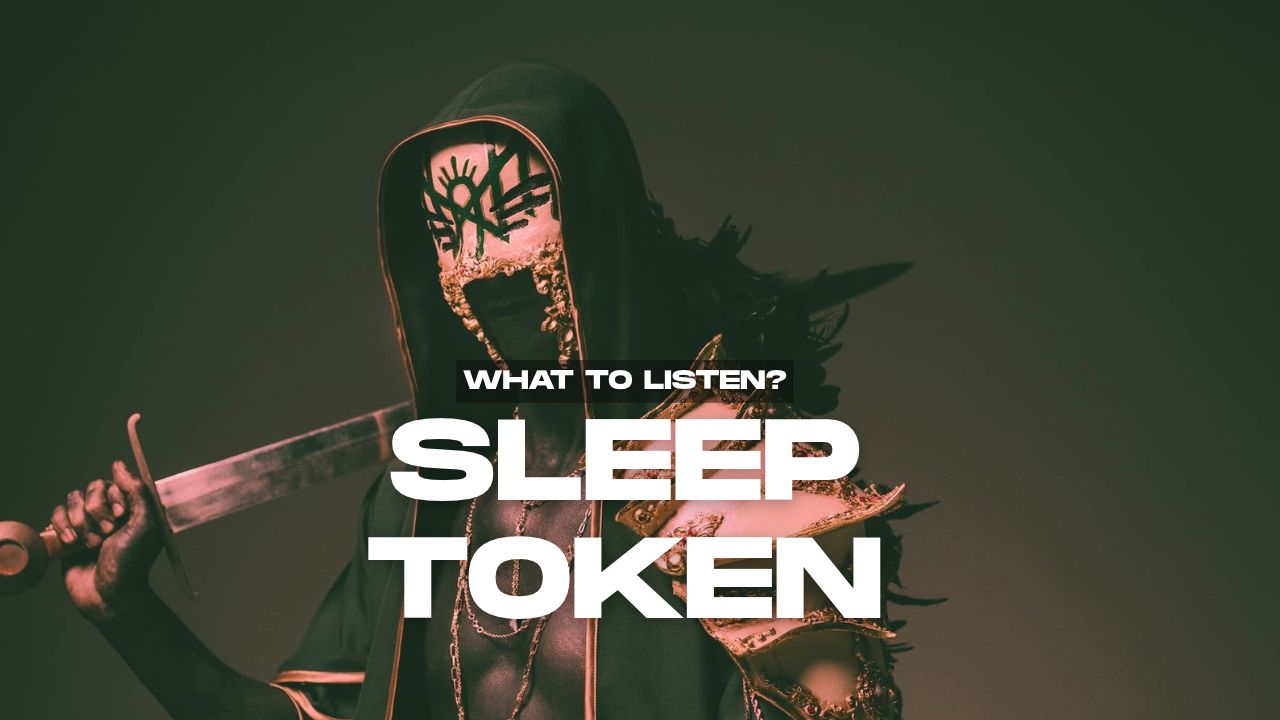
What to listen? - Sleep token (UK)
What's on my headphones? What's meeting my music quota? Well this is easily answered...say hello to Sleep Token from the United Kingdom.
Lion in a Suit · 13 November 2026 · 1 min
Culture · Opinion
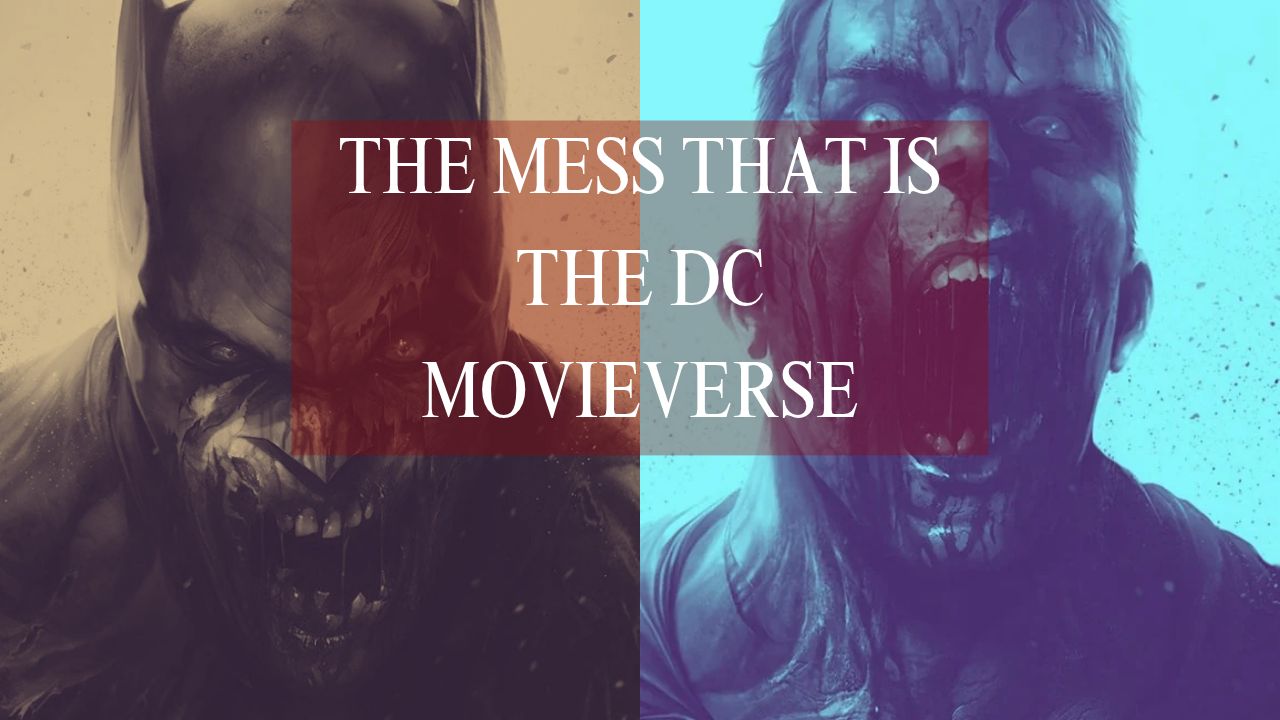
The Mess that is the DC movieverse
With another change in leadership at DC Studios seemingly coming in the near future, one can only wonder: what now?
Lion in a Suit · 11 November 2026 · 2 min
Culture · Essay
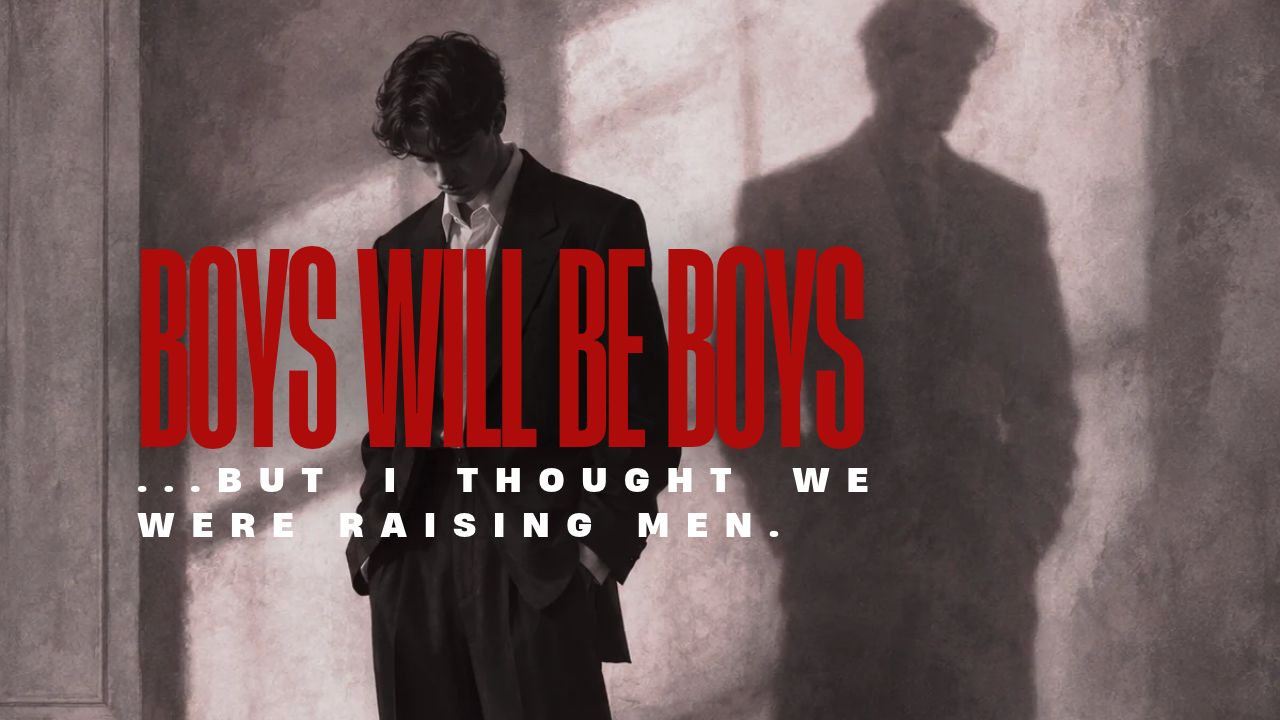
Boys will be boys
...But I thought we were raising men. I'm sorry, but boys will be better. Boys will grow, boys will mature... and boys will learn that hurting others is never acceptable.
Lion in a Suit · 6 November 2026 · 8 min